◆ In short
- Glossy: deep blacks and saturated colour, but reflective — for albums and controlled light
- Matte: no reflections, soft rendering — the safe choice for frames and portraits
- Fine art cotton: gallery quality, 100+ years — for exhibitions, portfolios, artworks
- Black and white: renders better on matte or fine art
- Photos to hang: almost always matte, to avoid reflections on the glass
Why the paper changes everything
The same photo, printed from the same file on the same printer, can look like two different images depending on the paper. The surface finish decides how much light is reflected or absorbed — and therefore how deep the blacks are, how vivid the colours, and how readable the photo is under real light.
Photo papers fall into three families: glossy, matte (satin) and fine art (cotton). There is no single best one — only the right one for a given image and how it will be displayed. Let's go through them.
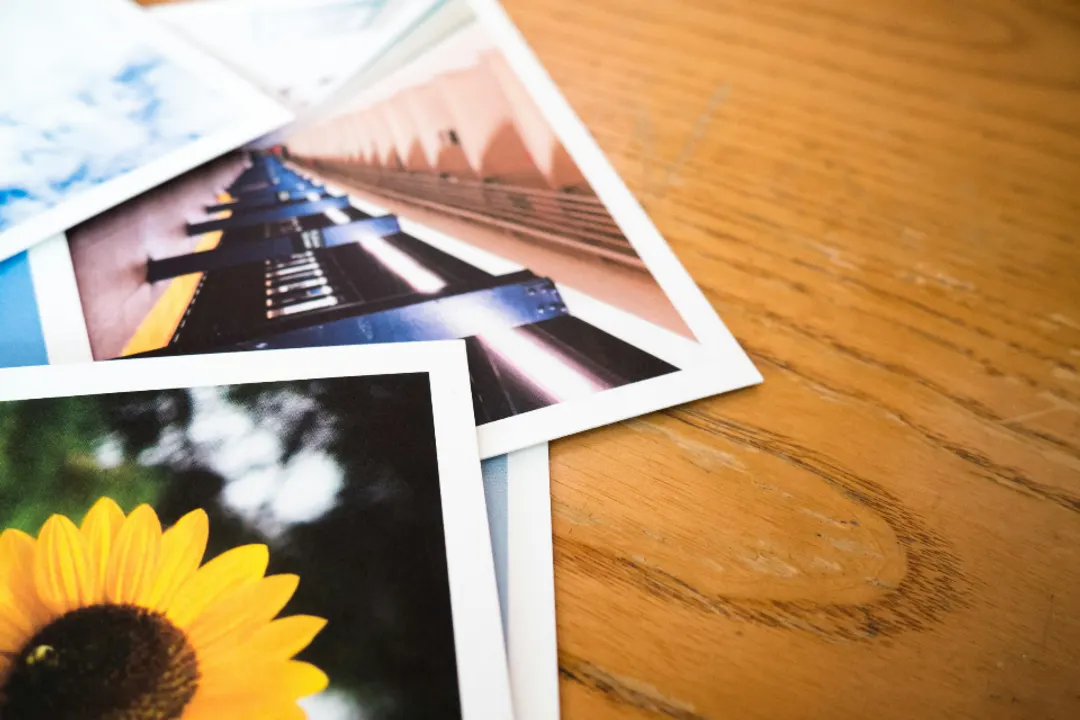
The three families of photo paper
Glossy
Maximum contrast and saturation- Finish: shiny, reflective surface
- Blacks (D-max): the deepest, the glossy coating absorbs more light
- Colours: saturated and vivid, wide gamut
- Reflections: high, hard to view under direct light or behind glass
- Fingerprints: holds marks and prints, handle by the edges
When to choose it: landscapes, photos shown in controlled light, commercial portraits, images that must "pop". Avoid for frames hung in brightly lit rooms.
Matte (satin)
No reflections, elegant rendering- Finish: satin, non-reflective surface
- Blacks (D-max): slightly less deep than glossy
- Colours: softer, more natural, less saturated
- Reflections: virtually none, excellent behind glass and in frames
- Fingerprints: does not hold marks, easier to handle
When to choose it: professional portraits, photos to frame, black and white, prints displayed in lit rooms. The safe choice for framing behind glass.
Fine art (cotton)
Gallery quality, archival- Material: 100% cotton, no optical brighteners (Hahnemühle, Canson papers)
- Finish: tactile texture, matte or slightly velvety
- Longevity: over 100 years without yellowing (museum / archival grade)
- Colours: wide gamut with pigment inks, smooth transitions
- Rendering: depth and three-dimensionality you can feel in hand
When to choose it: exhibitions, limited editions, professional portfolios, artworks and fine-art photography. When the print itself is the object of value.
Which paper to choose, photo by photo
- Landscapes and saturated colour: glossy, to maximise saturation and black depth.
- Professional portraits and framed prints: matte, no reflections behind glass and elegant skin rendering.
- Black and white: matte or fine art, for rich greys and no reflections breaking the tones.
- Exhibitions, portfolios, artworks: fine art cotton, gallery quality and 100+ years archival.
- Many small prints (keepsakes, gifts): standard glossy or matte, great rendering at low cost.
The advice we always give at the counter: the difference is only visible in hand, under real light. For an important run, start from a proof before printing everything.
Fine art and archival: what "museum grade" means
Fine art papers (Hahnemühle, Canson) are 100% cotton and free of optical brighteners — the additives that make ordinary papers look "whiter" but yellow over the years. Printed with pigment inks, they reach over 100 years of stability: hence "museum grade" or archival.
Beyond longevity, the rendering changes: the cotton texture gives the print a depth and three-dimensionality you can feel by touch. It is the right paper when the print is not just a memory but an object of value: an artwork to sell, an exhibition, a portfolio that represents you.
Photo paper mistakes to avoid
The mistakes we see most often. All avoidable with two minutes of attention and a proof.
Glossy paper for photos hung on a wall
Under room light or behind glass, glossy reflects and the image becomes unreadable from many angles. For framed prints, choose matte almost every time.
Judging the paper from your screen
A screen is backlit and over-saturates everything: a photo that looks great on a monitor can fall flat on matte or look over-contrasted on glossy. Always ask for a proof before a large run.
Using fine art for everyday photos
Cotton paper costs more (around € 1.50-3 per print depending on size): it makes sense for artworks and exhibitions, not for 100 holiday snaps. For those, standard glossy or matte look great at a fraction of the cost.
Low-resolution files on large format
No paper saves a 72 dpi file blown up to A2: it comes out pixelated. For printing you need at least 200-300 dpi at final size. Send us the file and we check it before printing.
Frequently asked questions
What is the difference between glossy and matte photo paper?
Glossy paper has a shiny surface that boosts contrast and saturation and produces the deepest blacks, but it reflects a lot of light — less suited to photos hung on a wall or behind glass. Matte (satin) has a non-reflective surface, softer and more natural colour, and is ideal for portraits, black and white and framed prints because it creates no reflections.
What is fine art paper and when is it worth it?
Fine art paper is 100% cotton with no optical brighteners (brands like Hahnemühle and Canson), with a wide gamut and over 100 years of stability without yellowing (museum grade). It is worth it when the print itself is the object of value: exhibitions, limited editions, professional portfolios, artworks. For everyday photos it is overkill.
Which paper is best for black and white photos?
For black and white, matte or fine art almost always render better than glossy: they reproduce greys more richly and without reflections that break up the tones. Fine art cotton in particular gives black and white that fine-print depth.
Which lasts longer, glossy or matte?
At equal quality, inks and substrate matter most. Pigment-ink prints on fine art cotton paper are the most durable (over 100 years in proper storage). Standard glossy and matte photo papers still last many years; glossy is slightly more sensitive to fingerprints and surface scratches.
How much does it cost to print photos on these papers?
As a guide, on standard glossy or matte paper 50 prints at 10x15 cm start from around € 15-20 (€ 0.30-0.40 each), with the per-print price dropping as quantity rises. Fine art (cotton) quality costs more, around € 1.50-3 per print depending on size. For an exact quote send your file to stampa@guug.it.
Can I see paper samples before printing?
Yes, and it is the best way to choose: the difference between glossy, matte and fine art is only truly visible in hand, under real light. Come to the shop in Rome (Prati) with your files and we will show you samples and a proof before the full run.
◆ Keep reading
◆ Ready to print?